

Marshmallows are a nostalgic treat, often associated with cozy hot cocoa, gooey s’mores, and festive holiday baking. However, traditional marshmallows are loaded with sugar, making them less than ideal for those looking to cut down on carbs. These sugar-free marshmallows deliver the same light, fluffy texture without relying on traditional sweeteners.
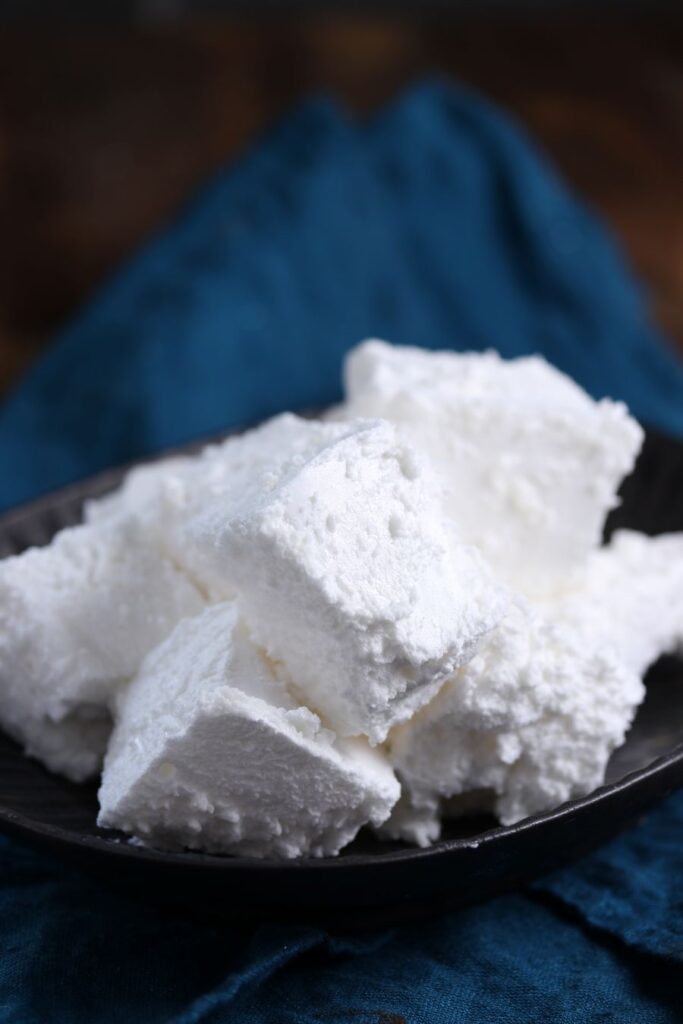
Unlike store-bought sugar-free marshmallows that often contain artificial sweeteners and additives, these homemade marshmallows use allulose, a natural sugar alternative that mimics the caramelization and texture of sugar without the glycemic impact.
The key to achieving the perfect marshmallow texture lies in properly whipping the mixture. As the gelatin combines with the heated syrup, it transforms into a soft, pillowy consistency that melts just like traditional marshmallows.
Helpful Tips for Perfect Sugar-Free Marshmallows
Making marshmallows requires precise timing and the right technique to achieve the perfect airy texture. Since this recipe does not use traditional sugar, following a few essential tips will help ensure the best results.
When working with gelatin, allowing it to bloom properly is essential. This means letting it sit with water for a few minutes before incorporating the hot syrup. Skipping this step can result in a lumpy texture rather than the smooth, fluffy marshmallow you’re aiming for.
- Let the gelatin bloom. Allowing the gelatin to absorb the water fully helps create the right structure when whipped.
- Heat the syrup carefully. The allulose should simmer but not change color unless you’re making caramel-flavored marshmallows.
- Slowly incorporate the syrup. Adding the hot syrup gradually ensures the mixture blends smoothly without clumping.
- Whip until fluffy. The mixture should triple in size and turn bright white when it’s ready.
- Work quickly when spreading. Once whipped, the mixture sets fast, so transfer it to the baking tray immediately.
What to Eat with Sugar-Free Marshmallows
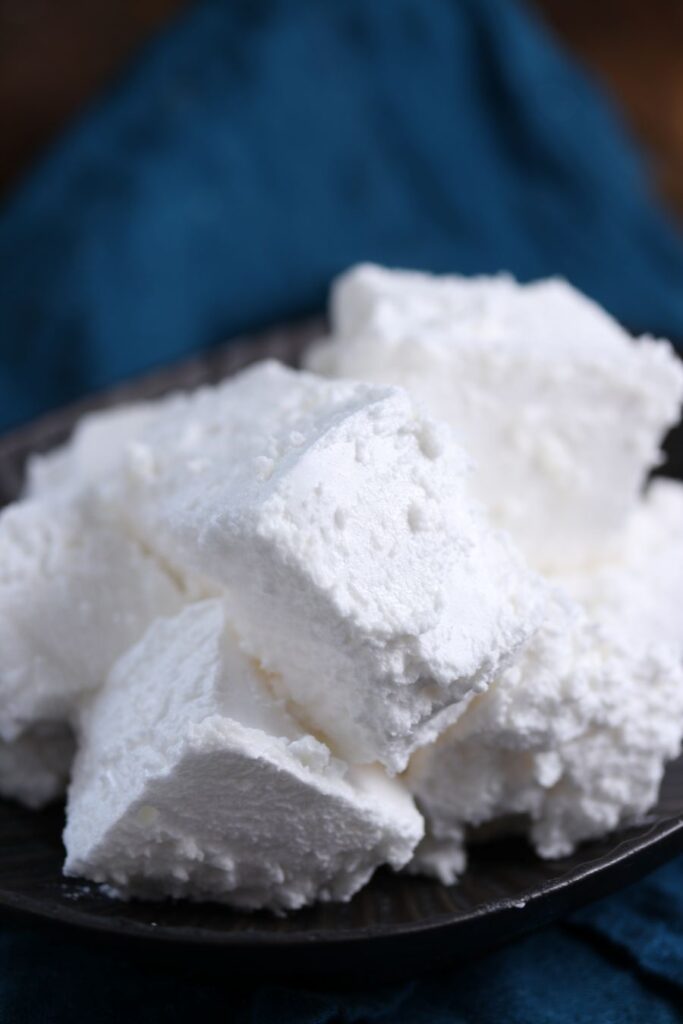
These marshmallows can be enjoyed on their own or used in a variety of recipes. Whether you’re adding them to drinks, roasting them for s’mores, or incorporating them into desserts, they offer endless possibilities.
- Hot chocolate or coffee
- Homemade gluten free s’mores
- Topped on keto brownies
- Mixed into cereal or granola
- Dipped in melted dark chocolate
- Used in homemade sugar-free rice crispy treats
- Baked into gluten-free chocolate cookies for a gooey center
Storage & Reheating
Sugar-free marshmallows store well and can be kept for later use. Once fully set, place them in an airtight container at room temperature for up to a week. Avoid refrigerating them, as moisture can alter their texture and cause them to become sticky. If they begin to stick together, dust them lightly with powdered allulose or a keto-friendly starch alternative.
For long-term storage, marshmallows can be frozen. To prevent sticking, separate layers with parchment paper and store them in an airtight bag for up to a month. When ready to use, allow them to come to room temperature before serving. They will retain their light and airy texture if stored correctly.

A Classic Treat with a Sugar-Free Twist
Homemade sugar-free marshmallows prove that you don’t need sugar to enjoy this classic treat. They’re just as light and fluffy as traditional marshmallows, with the added benefit of being customizable. You can make them plain, caramelized, or even flavored with extracts like peppermint or almond for a seasonal twist.
Whether you make them for a special occasion or just to have a better-for-you version on hand, they’re sure to become a staple in your kitchen. Once you realize how easy they are to make, you may never go back to store-bought options again!
Sugar-Free Marshmallows
Ingredients
- 1 cup water divided
- 3 tablespoons gelatin powder
- 1 cup allulose
- 1 teaspoon vanilla extract
Instructions
- Add ½ cup of water and gelatin powder to a stand mixer’s metal bowl. Let it sit for 10 minutes to bloom.
- Line a baking tray or dish with parchment paper. A smaller dish will create thicker marshmallows, while a wider dish will make them thinner.
- In a saucepan, combine the remaining ½ cup of water, allulose, and vanilla. Simmer over medium heat for 5 minutes without letting the allulose change color. For caramel-flavored marshmallows, simmer for 10 minutes until the mixture begins to caramelize.
- Start the stand mixer on low speed, mixing the gelatin mixture. Slowly pour in the hot allulose syrup while continuing to mix.
- Once all of the syrup is incorporated, increase the stand mixer to high speed and whip for about 10 minutes. The mixture will expand and turn white.
- Quickly transfer the marshmallow mixture onto the prepared baking tray, spreading it evenly. Leave it uncovered at room temperature for 6 hours before cutting into pieces.
- These marshmallows will melt under high heat, just like traditional marshmallows.