

Taking care of your scalp is just as important as caring for your hair, and what better way to do it than with an all-natural Rosemary Scalp Scrub? This simple DIY recipe helps to exfoliate the scalp, remove dead skin, and promote healthy hair growth. The combination of sugar, rosemary, and nourishing carrier oils makes this scrub a refreshing addition to your hair care routine.

Why Use a Scalp Scrub?
Over time, product buildup, dead skin cells, and oils can clog hair follicles, which may lead to scalp issues such as dryness, itchiness, or dandruff. A scalp scrub gently exfoliates away this buildup, allowing your scalp to breathe, while promoting healthier hair growth. Using natural ingredients like rosemary can further boost circulation, which may help stimulate the hair follicles.
Benefits of Rosemary for Hair
Rosemary has long been used as a natural remedy for hair care. It’s known for its ability to improve circulation to the scalp, which can encourage hair growth and prevent thinning. Rosemary also has antimicrobial properties, helping to soothe irritation and keep the scalp free from harmful bacteria or fungi.
By incorporating rosemary into this scalp scrub, you’re giving your scalp a boost of natural care that’s free from the harsh chemicals found in many commercial hair products.
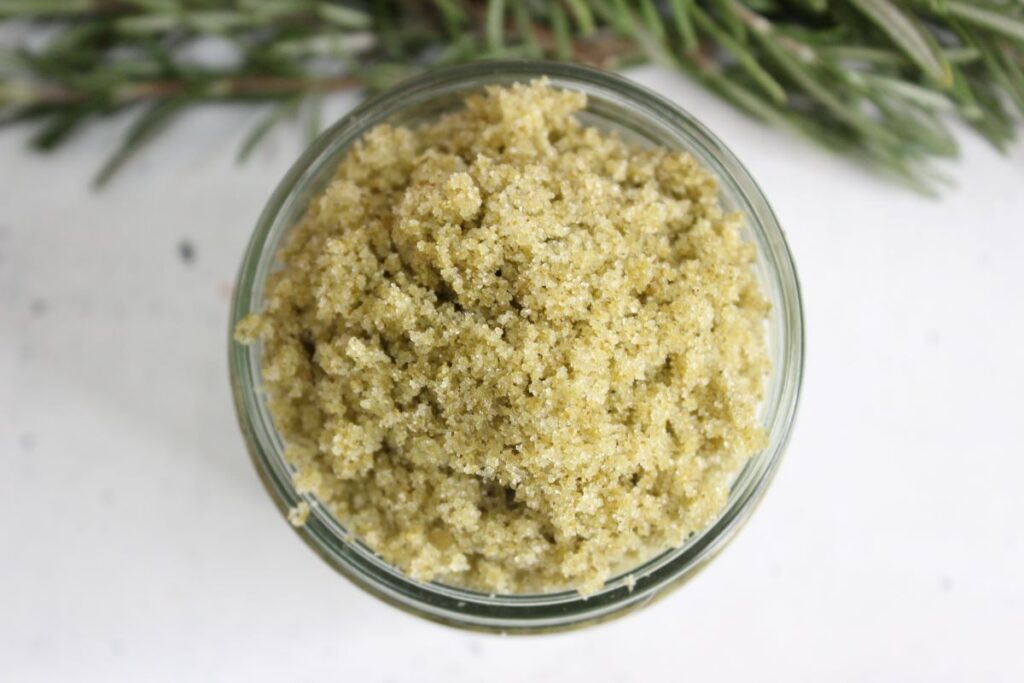
DIY Rosemary Scalp Scrub Recipe
Ingredients
- ½ cup sugar
- 2 tablespoons carrier oil (such as coconut oil, olive oil, or jojoba oil)
- 1 tablespoon rosemary (ground into a powder)
- 15-25 drops essential oils (optional)
Instructions
- Combine the essential oils with the carrier oil of your choice.
- Stir the carrier oil and sugar together until well mixed.
- Grind the rosemary into a fine powder and add it to the mixture. Stir until thoroughly combined.
To Use: Apply the scrub to a wet scalp, gently massage for a few minutes, and rinse thoroughly. Follow up with your usual shampoo and conditioner to wash away any residue.
Customizing Your Scalp Scrub
One of the best parts about this DIY scalp scrub is how customizable it can be. You can use any carrier oil that suits your needs, whether it’s coconut oil for its moisture-locking properties or jojoba oil for a lightweight feel. If you’re a fan of essential oils, feel free to add your favorites for extra benefits—lavender, for example, is known for its soothing and anti-inflammatory properties, making it a great addition to your hair care routine.
Looking for a variation? Lavender powder can be used in place of rosemary for a gentler, fragrant scalp treatment. Both herbs have excellent hair and scalp benefits, so you can switch between them depending on your preferences.
How Often to Use a Scalp Scrub
It’s recommended to use a scalp scrub once a week for best results. Over-exfoliating can lead to dryness, so be mindful of how your scalp responds. If you have sensitive skin, start with every other week and see how your scalp feels after each use. Before using any new product, it is always best to do a skin test to make sure there are no sensitivities.

Final Thoughts
Using a natural rosemary scalp scrub is a great way to care for your scalp and support healthy hair growth. With just a few simple ingredients, you can create a nourishing treatment that will leave your scalp feeling refreshed and your hair looking its best. Whether you’re dealing with product buildup, dryness, or simply want to give your scalp a little extra love, this scrub is a must-try for your hair care routine.
If you love homemade scrubs, be sure to check out our Pink Hibiscus Scrub.
Disclaimer: These statements have not been evaluated by the Food and Drug Administration. The content of this article, provided by The Happy Body Project (Holistic Fit LLC), is for informational purposes only and does not constitute medical advice. It is not a substitute for professional advice, diagnosis, or treatment. Always consult a qualified healthcare provider with questions about medical conditions or new products. If you suspect a medical condition, seek immediate attention. Do not delay or disregard medical advice based on this information. Suggestions for homemade products are for informational purposes only and should be made and used at your own risk. Reliance on any information in this article is solely at your discretion.