
Whether you’re melting chocolate, making delicate sauces, or concocting homemade cosmetics, knowing how to set up a DIY double boiler can be a valuable kitchen skill. This setup allows you to heat ingredients gently and evenly, preventing burning or curdling that can occur with direct heat. Here’s a simple guide to creating your own double boiler using items you likely already have in your kitchen.
Why Use a Double Boiler?
A double boiler provides a crucial benefit in both the kitchen and the craft room: gentle and consistent heating. This method is perfect for any task that requires careful temperature control to prevent ingredients from overheating, which can degrade their quality or alter their properties. The best part is that you don’t need any fancy equipment!
Here are a few reasons why a double boiler can be beneficial:
- Even Heat Distribution: The indirect heat from a double boiler ensures that heat is distributed evenly, minimizing the risk of overheating, which is vital for both delicate cooking processes and sensitive crafting materials.
- Temperature Control: By using steam as a heat source, a double boiler allows for more precise control over the temperature, essential for achieving perfect results whether you’re melting chocolate, combining emulsions, or crafting homemade beauty products like lip balms or lotions.
- Safe Heating Method: The gentle nature of steam heating reduces the risk of burning or scorching, which not only preserves the integrity of culinary ingredients but also protects heat-sensitive crafting compounds.
What You’ll Need
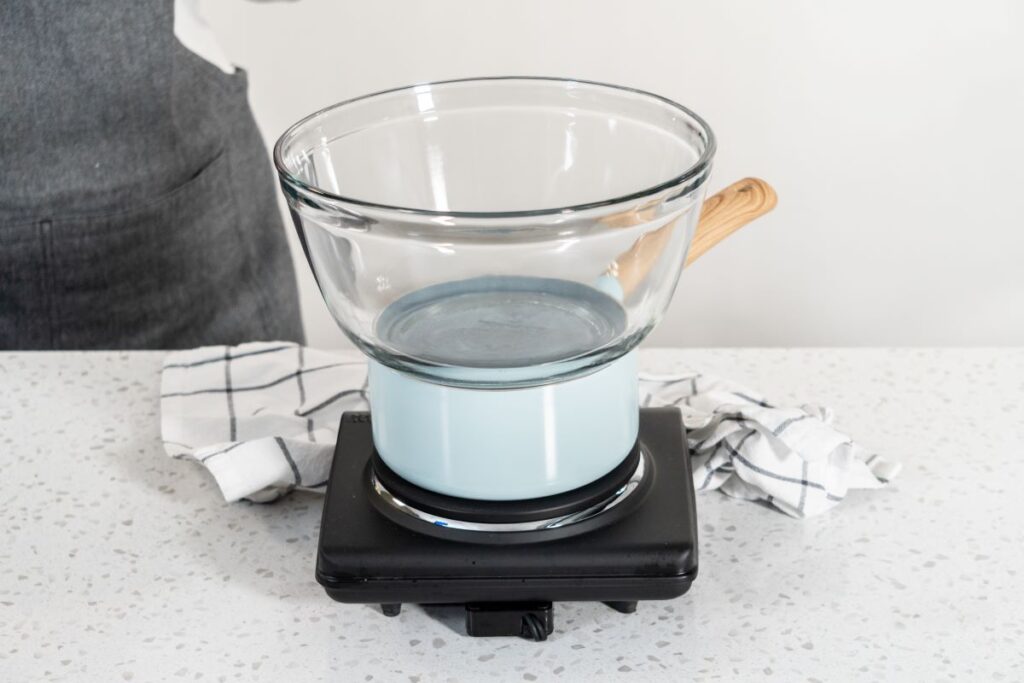
- A pot and a heatproof bowl: The bowl should be large enough to sit on top of the pot without touching the bottom. Glass or stainless steel bowls are ideal because they conduct and retain heat well.
- Water: Enough to fill the pot about one-quarter to one-third full, but not so much that it touches the bottom of the bowl when seated on top.
- Ingredients for your recipe: Whatever you plan to melt, cook, or emulsify.
Steps to Set Up Your DIY Double Boiler
- Fill the Pot with Water: Add enough water to your pot so it’s about a quarter full. It’s important that the water doesn’t touch the bottom of the bowl when it sits on top of the pot.
- Place the Bowl: Set your heatproof bowl on top of the pot. The bowl should fit snugly without any risk of falling in. If steam escapes from around the bowl, that’s fine—it means heat is circulating inside.
- Heat Things Up: Bring the water to a simmer over medium heat. The steam produced by the simmering water will heat the bottom of the bowl, gently warming whatever is inside.
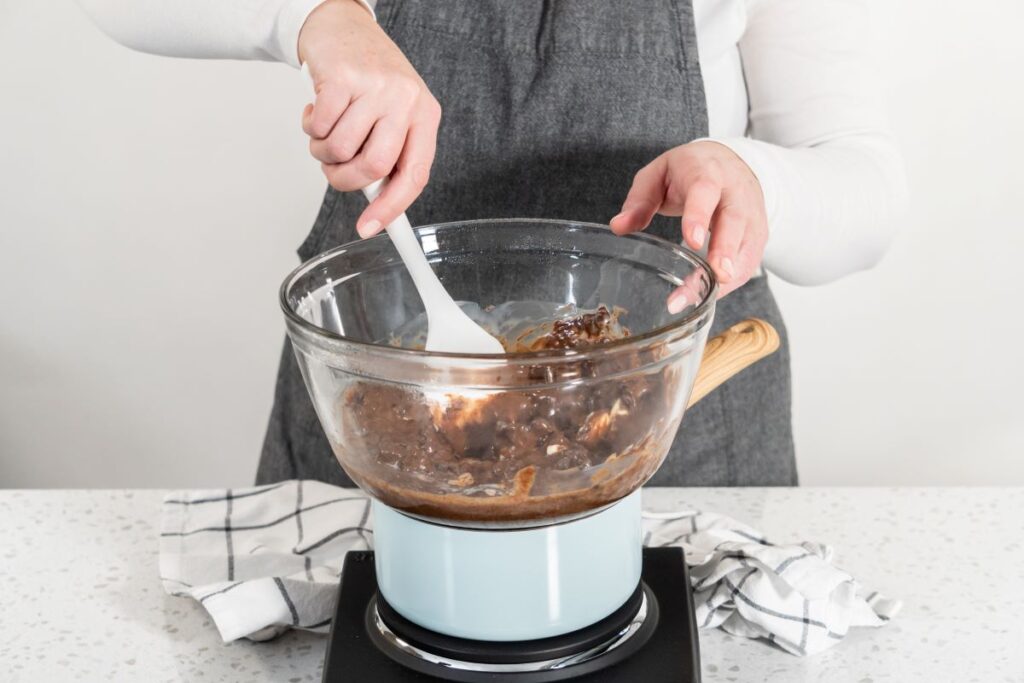
- Add Ingredients: Once the water is simmering, add your ingredients to the bowl. Stir occasionally to ensure even heating and prevent any burning or sticking, if necessary.
- Monitor and Adjust: Keep an eye on your water level. If the water evaporates too much, add a bit more to prevent the pot from drying out. Adjust the heat as needed to maintain a gentle simmer and avoid boiling or splashing water.
Tips for Using Your DIY Double Boiler
- Do Not Cover the Bowl: Allowing steam to escape prevents pressure build-up and overheating.
- Stir Gently: Especially when melting chocolate or combining delicate ingredients, gentle stirring helps distribute heat evenly.
- Be Patient: Double boiling is a slow process. Rushing it by increasing the heat can defeat the purpose of using this gentle technique.
Variations for Setting Up a DIY Double Boiler
While the standard double boiler setup involves using a pot and a heatproof bowl, there are other methods you can use depending on what you have available in your kitchen or craft area. These variations can be just as effective for providing gentle heat to your ingredients. Here are a few alternatives:

Using a Strainer or Colander
If you don’t have a heatproof bowl that fits snugly over your pot, a strainer or colander can be an excellent alternative. Place it on top of a pot with simmering water, ensuring that the bottom does not touch the water. This setup is ideal for steaming ingredients or for tasks where direct contact with the rising steam can evenly heat the container’s contents. It’s particularly useful for melting ingredients that need constant airflow to prevent condensation.
Direct Heatproof Bowl in Water
For ingredients that benefit from a bit more heat without the direct harshness of a stove burner, placing a heatproof bowl so that it touches the water slightly can be effective. This method allows for a higher heat transfer while still providing the protective benefits of indirect heating. Ensure the water is simmering gently to avoid water splashing into your ingredients.
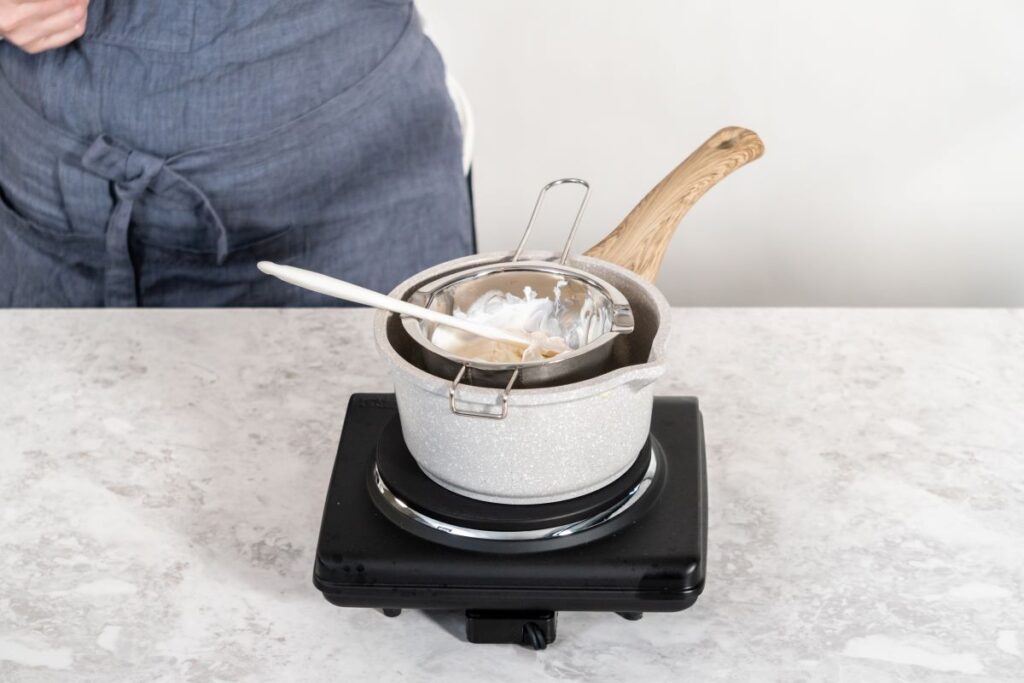
Using a Smaller Saucepan Inside a Larger One
If you have two saucepans of different sizes, you can fill the larger one with a couple of inches of water and place the smaller one inside. This creates a double boiler effect, allowing the ingredients in the smaller saucepan to heat up from the steam produced by the water in the larger pan. Make sure the water level is low enough so it doesn’t boil over into the smaller pan.
Using a Slow Cooker
For very gentle and prolonged heating, you can use a slow cooker as your water bath. Place a heatproof bowl or smaller pot inside the ceramic insert of the slow cooker, fill it with water, and set it to low. This method is ideal for long-duration tasks such as infusing oils or gentle simmering that doesn’t require immediate attention.
Each of these variations provides a way to gently heat ingredients using tools you might already have in your kitchen. By understanding the principles behind the double boiler method, you can adapt various kitchen tools to suit your needs, whether you’re cooking, baking, or making homemade beauty products.